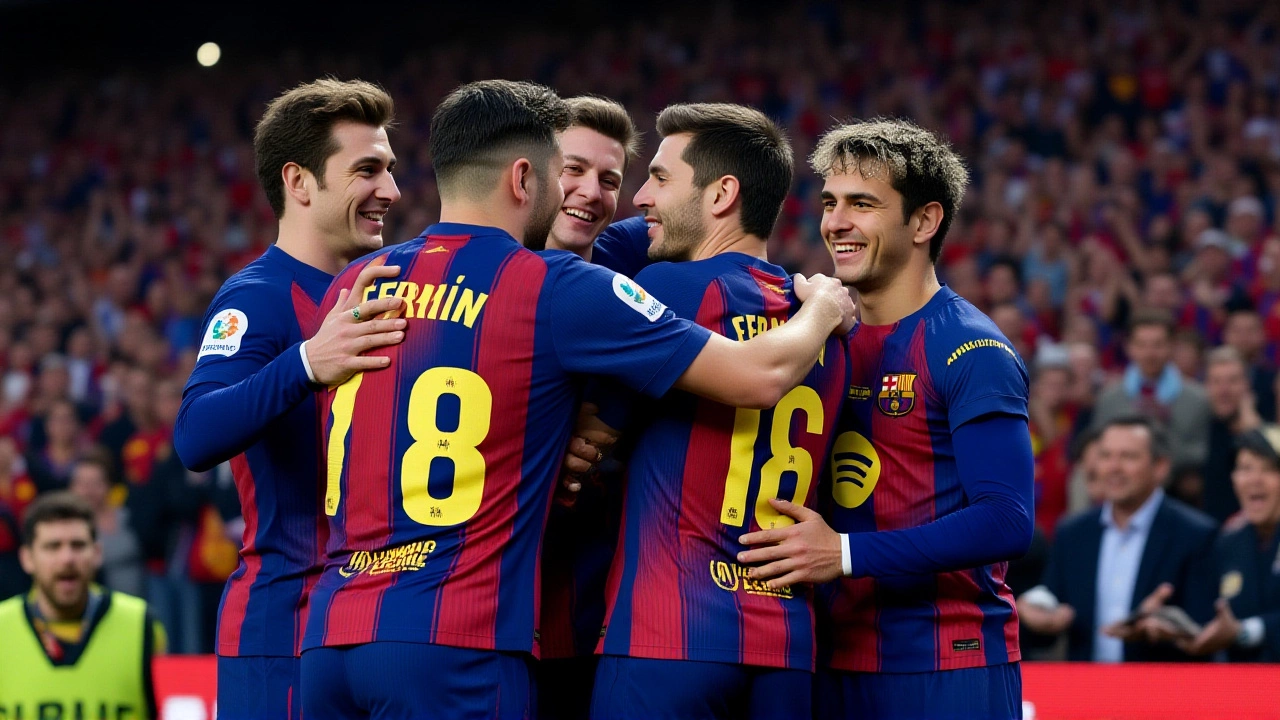
When Chelsea dismantled Barcelona 3-0 at Stamford Bridge on November 25, 2025, it wasn’t just a win—it was a statement. The UEFA Champions League matchday 5 clash turned into a masterclass in pressure, precision, and punishing opportunity, as Barcelona collapsed under the weight of their own errors and a red card to captain Ronald Araújo in the 43rd minute. The result didn’t just shift group dynamics—it sent shockwaves through European football. Chelsea didn’t just win; they announced themselves as serious contenders.
Early Pressure, Late Breakthrough
Chelsea came out like a team with something to prove. Within three minutes, Enzo Fernández had the net rippling—but the goal was disallowed for offside. Then, again in the 22nd minute, after a free kick from Estêvão Willian, Fernández struck again. Offside. Again. The frustration was palpable. Barcelona, meanwhile, looked brittle. Lamine Yamal Torres, the 17-year-old Spanish sensation, missed a golden chance in the fifth minute, skying a half-volley over the bar. "What a miss by Torres!" blared the live commentary. The tension was building.
Then, the breakthrough came—not from a Chelsea star, but from a Barcelona blunder. In the 26th minute, a cross from Marc Cucurella clipped the heel of Jules Kounde and looped over Joan Garcia, the Barcelona goalkeeper. 1-0. The Stamford Bridge crowd roared. It wasn’t pretty, but it was enough. And then, in the 43rd minute, everything changed.
Araújo’s Red and the Turning Point
Ronald Araújo, Barcelona’s defensive rock and captain, had been a menace all night—challenging, shouting, commanding. But in the 43rd minute, he lunged into a reckless tackle on Cucurella near the touchline. First yellow. Twelve minutes later, he committed another foul—this time a high, studs-up challenge on Moisés Caicedo. Second yellow. Red card. The Uruguayan trudged off, head down, as the Stamford Bridge crowd erupted. Barcelona were down to 10 men with just seconds to go before halftime. The game was effectively over.
"It’s the kind of moment that defines a match," said ESPN analyst Marcus Hedges. "Araújo’s absence didn’t just weaken their defense—it shattered their rhythm. Barcelona had no Plan B. No leader. No backbone. And Chelsea smelled blood."
Second Half: The Execution
The second half was a clinic in controlled aggression. Chelsea didn’t sit back. They pressed. They switched play. They exploited the space left by Barcelona’s overcommitted fullbacks. In the 54th minute, Marc Cucurella surged down the left, cut back to the edge of the six-yard box, and found Pedro Neto. The Portuguese winger, playing as a false nine, flicked the ball toward goal. Andreas Christensen, the former Chelsea defender now playing for Barcelona, got a touch—but it only deflected onto Kounde, who couldn’t clear it in time. 2-0.
Then, in the 74th minute, Liam Delap—the 21-year-old English striker who hadn’t scored since the Club World Cup final—finished off a counterattack with a low, driven shot from the edge of the box. The ball slipped past Garcia’s outstretched hand. 3-0. The goal was Delap’s first in 189 days. "It’s the kind of moment you dream of," he told reporters afterward. "I’ve been waiting for this."
What This Means for Both Teams
For Chelsea, this win was monumental. They now sit second in Group D, just one point behind leaders Bayern Munich, with two games left. A win in their next match against Club Brugge and another against PSV Eindhoven will seal direct qualification to the Round of 16. "This," said Enzo Maresca, "is the best 90 minutes we’ve played under me. The intensity, the discipline, the belief—it’s all clicking."
For Barcelona, the situation is dire. They’re now third in the group, two points behind Chelsea, with only a win over PSV Eindhoven and a favorable result in their final match against Bayern Munich offering any hope of advancing. Their defense looked disjointed. Their midfield was overrun. And their captain, their emotional anchor, was gone.
Behind the Numbers
- Chelsea had 68% possession—their highest in a Champions League match since 2021.
- They won 72% of midfield duels, according to Opta data.
- Barcelona managed just 3 shots on target—all saved by Robert Sánchez.
- Liam Delap’s goal was his first in 189 days and only his third for Chelsea in all competitions.
- Barcelona’s red card was their 10th in Champions League play since 2020—the most in Europe’s elite competition over that span.
What’s Next?
Chelsea’s next match is a home game against Club Brugge on December 10. A win there could be enough to clinch their spot. Meanwhile, Barcelona must travel to PSV Eindhoven on December 11—where they haven’t won since 2018—and then face Bayern Munich at the Camp Nou. Their fate is no longer in their own hands.
As for Enzo Maresca? The Italian, who took over in May 2024, has quietly turned a fractured squad into a fearsome unit. The absence of Cole Palmer didn’t matter. The midfield trio of Caicedo, Fernández, and Reece James controlled the tempo. And the defense—led by Wesley Fofana and Trevoh Chalobah—was impenetrable.
One win doesn’t make champions. But this? This was the kind of performance that makes you believe.
Frequently Asked Questions
How did Chelsea manage to dominate without Cole Palmer?
Chelsea’s midfield trio of Moisés Caicedo, Enzo Fernández, and Reece James absorbed Barcelona’s pressure and dictated tempo, allowing wide players like Marc Cucurella and Pedro Neto to exploit space. The team’s pressing system and tactical discipline compensated for Palmer’s absence, with Liam Delap and Estêvão Willian providing direct attacking threat from deeper positions.
Why was Ronald Araújo’s red card so damaging for Barcelona?
Araújo wasn’t just Barcelona’s captain—he was their defensive leader and emotional anchor. His absence forced Barcelona into a more cautious shape, opening gaps in midfield and leaving their fullbacks exposed. With no clear leader on the pitch, their organization collapsed, and Chelsea capitalized with relentless attacking runs and precise passing.
What does this result mean for Chelsea’s Champions League chances?
Chelsea now sit second in Group D with 10 points, just one behind Bayern Munich. They need just two wins from their final two matches—against Club Brugge and PSV Eindhoven—to guarantee direct qualification to the Round of 16. This win significantly boosts their confidence and puts them in control of their destiny for the first time since 2021.
How has Enzo Maresca transformed Chelsea in 18 months?
Maresca has instilled a high-pressing, possession-based system with clear positional discipline. He’s developed young players like Liam Delap and Estêvão Willian, while integrating veterans like Reece James into a cohesive unit. The team’s defensive record has improved dramatically, and they’ve gone from inconsistent to clinical—evidenced by this 3-0 win over a historically dominant side like Barcelona.
Is Barcelona’s Champions League campaign over?
Not officially, but their chances are slim. They need to beat PSV Eindhoven and hope Bayern Munich loses to Chelsea, then beat Bayern in their final match. Even then, goal difference and head-to-head tiebreakers may work against them. Their performance at Stamford Bridge exposed deep tactical and psychological issues that won’t be fixed overnight.
What was the significance of Pedro Neto’s role in the match?
Neto, playing as a false nine, was Chelsea’s most dangerous attacking threat. He dropped deep to draw defenders out, creating space for Cucurella and Estêvão Willian to overlap. His movement confused Barcelona’s high line, and his flicked assist for the second goal showcased his technical quality. He was the fulcrum of Chelsea’s attack when Palmer was absent.